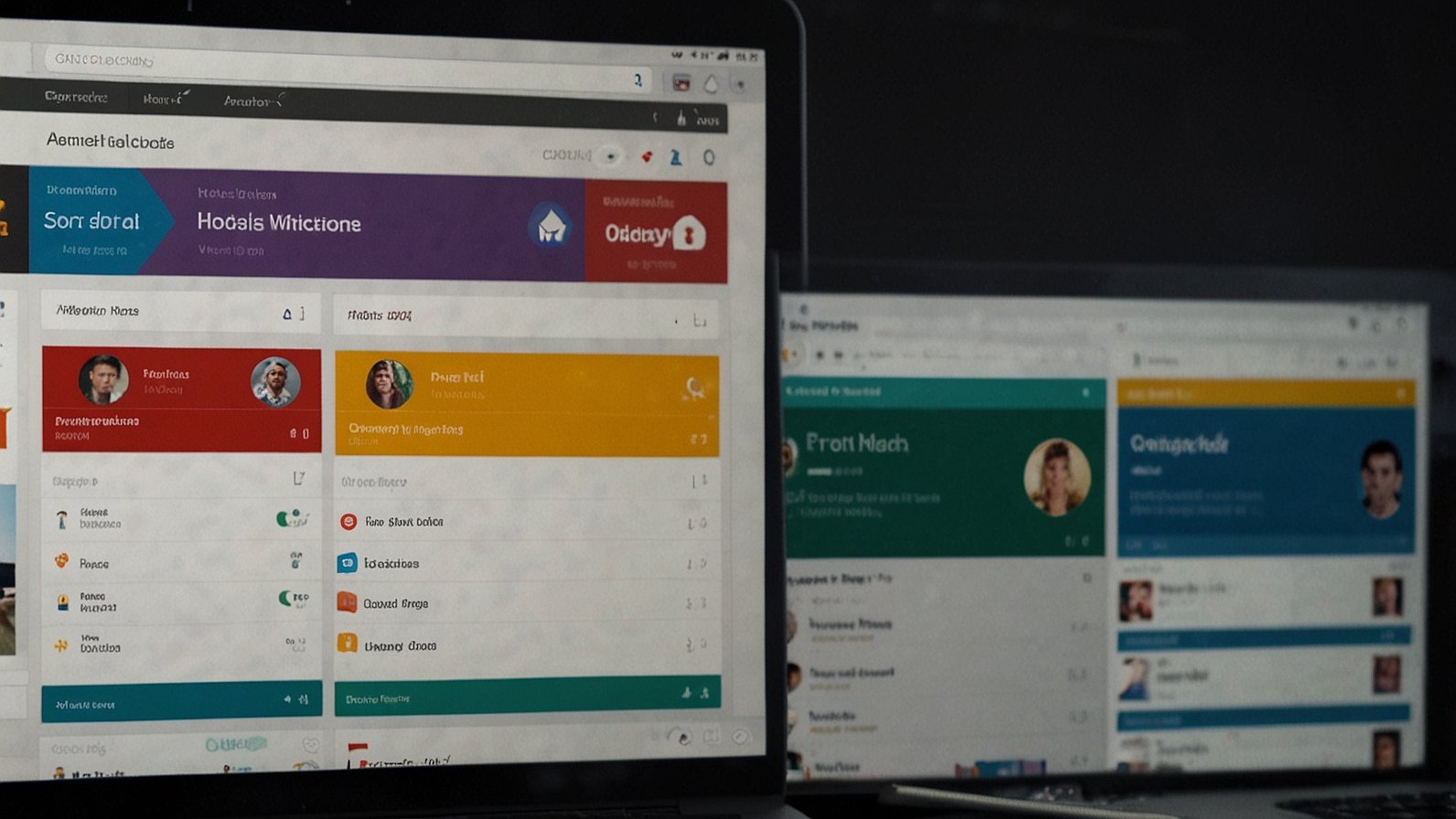






Ever feel like you’re juggling a dozen apps, platforms, and tools just to get a clear picture of your business, your projects, or even your own daily goals? You’re not alone. In today’s digital whirlwind, data is everywhere, but genuine, actionable intelligence feels just out of reach. What if there was a unified approach, a single intelligent layer that connected the dots for you? This is the ambitious promise behind a concept like Qezoracinkolid. While not yet a product on shelves, let’s explore this speculative brand as a beacon for where integrated digital-intelligence solutions are headed.
The Core Idea: What is Qezoracinkolid, Really?
Let’s break it down without the tech-speak. Imagine your brain isn’t just one thing; it handles memory, creativity, logic, and instinct all at once. Now, imagine if your business’s digital tools worked with that same seamless harmony. That’s the essence of the Qezoracinkolid concept. It’s not pitched as just another software suite, but as a unified operating intelligence—a cohesive system designed to weave together data analytics, automation, human decision-making, and predictive insight into a single, fluid experience.
A common misconception is that “intelligence” here just means artificial intelligence doing everything for you. In this vision, it’s quite the opposite. The focus is on augmentation, not replacement. Think of it like a master carpenter and their tools. The tools don’t build the table alone, but with the right, perfectly integrated set, the carpenter’s skill is elevated, their work is precise, and the process is smooth. Qezoracinkolid aims to be that master toolkit for the digital age.
The Building Blocks: How Such a System Might Work
To understand the potential, we need to peek under the hypothetical hood. What principles would guide a concept this ambitious?
- Unified Data Fabric: Instead of data being locked in separate “silos” (like your CRM, your accounting software, and your project management tool never truly talking), this system would create a secure, living tapestry of all relevant information. It’s the difference between having ten different maps of the same city versus one dynamic, real-time 3D model.
- Adaptive Intelligence Layer: This is the “brain.” It would learn from patterns, automate mundane tasks (like data entry or generating routine reports), and surface surprising connections. For example, it might notice that a slight delay in your supply chain consistently leads to a dip in customer satisfaction two weeks later, prompting an early alert.
- Human-Centric Interface: The most advanced intelligence is useless if it’s confusing. The interface in this vision would be intuitive, perhaps even conversational. You could ask, “What’s our biggest risk this quarter?” and get a clear, reasoned analysis pulling from market data, internal performance, and team sentiment.
The table below summarizes the shift this concept represents:
| Traditional Toolset | Qezoracinkolid-Inspired Vision |
|---|---|
| Multiple, disconnected platforms | A single, integrated intelligence environment |
| Reactive reporting (what happened) | Proactive insight (what will/might happen) |
| Manual workflow creation | Adaptive, self-optimizing workflows |
| Steep learning curve per tool | Intuitive, unified interaction model |
| Data requires constant reconciliation | A consistent, real-time “source of truth” |
Seeing It in Action: Potential Use Cases
Let’s get practical. How might different sectors use such an integrated system?
- For a Marketing Team: Imagine launching a campaign. Instead of using one tool for email, another for social metrics, and a spreadsheet for sales data, the system provides a live dashboard. It shows not just opens and clicks, but how the campaign is influencing website behavior, sales pipeline velocity, and even customer service inquiry themes—allowing for real-time, micro-adjustments.
- In Healthcare Administration: A clinic could see an integrated view of a patient: appointment history, treatment notes, insurance updates, and even anonymized population health trends. This could help predict resource needs, personalize patient outreach, and reduce administrative overhead, letting staff focus on care. Institutions like the Mayo Clinic or Kaiser Permanente are already investing in pieces of this puzzle.
- For Small Business Owners: A shop owner could get a simple morning brief: “Sales are trending up, but Supplier X is running late. Your afternoon is light, so it’s a good time to plan next month’s inventory. Also, customer reviews highlight your packaging—here are some cost-effective upgrade options.” It’s like having a super-organized, data-savvy business partner.
The Road Ahead: Challenges and Considerations
No vision is without its hurdles. For a concept like Qezoracinkolid to move from speculation to reality, significant questions must be addressed.
- Privacy and Security: Centralizing so much sensitive data is a giant bullseye for cyber threats. Trust would be the number one currency. The system would need “privacy by design,” with ironclad encryption and clear user control over data.
- The Integration Mountain: Legacy systems are a reality. The idea would need to play nicely with existing tools from vendors like Microsoft, Salesforce, or SAP, not demand a scorched-earth replacement.
- Avoiding “Black Box” Anxiety: Users must trust the system’s suggestions. That means it must be able to explain its reasoning in understandable terms—”I’m recommending this because past data shows A, B, and C.”
Your Next Steps in a World Moving Toward Integration
While we wait for official details on such integrated platforms, you can start preparing now. The core philosophy of Qezoracinkolid is about breaking down barriers and seeking smarter workflows.
- Audit Your Digital Tools: Are there three tools doing the job of one? Where is data manually copied and pasted? This friction is your starting point.
- Prioritize APIs and Connectivity: When choosing new software, ask, “How well does it connect to our other systems?” Robust APIs are the building blocks of integration.
- Cultivate a Data-Minded Culture: Encourage your team to ask “What is the data telling us?” and to look for connections between different areas of operation.
- Start Small, Think Big: Implement a single, well-integrated tool that solves a specific pain point. Learn from that experience.
- Stay Curious, Stay Critical: Follow innovations from leaders in unified workspaces and AI augmentation. But always ask the hard questions about ethics, security, and practicality.
The journey toward seamless digital intelligence is a marathon, not a sprint. Concepts like Qezoracinkolid give us a destination to aim for—a future where our technology doesn’t add to the noise, but finally helps us make sense of it all.
What’s your take? What’s the biggest friction point in your own digital workflow that an integrated intelligence system could solve?
You May Also Like: What Hizzaboloufazic Found in the Wilds of the Internet
FAQs
Is Qezoracinkolid a real product I can buy today?
No, not currently. It’s presented here as a speculative, forward-looking concept to frame discussions about the future of integrated business intelligence and digital solutions.
Wouldn’t this just be another form of vendor lock-in?
It’s a valid concern. A truly beneficial system would need to be built on open standards and interoperability, allowing you to connect your choice of tools rather than forcing you into a single vendor’s entire ecosystem.
How is this different from existing platforms like Microsoft 365 or Google Workspace?
Those are excellent suites of connected applications. This concept takes it a step further, imagining a layer of native, proactive intelligence that flows seamlessly between all applications—including third-party ones—to provide insights and automation that span the entire digital environment, not just within one brand’s walled garden.
Is this just about big business?
Not in principle. The core value—simplifying complexity—is perhaps even more valuable for small businesses and entrepreneurs who wear many hats. The challenge would be making it affordable and accessible at that scale.
What happens if the system makes a wrong prediction?
Accountability is key. The system should be a “co-pilot,” not an autopilot. Its recommendations should always be clear, explainable, and subject to human approval and oversight. The human remains the final decision-maker.
What kind of skills would my team need to use this?
The goal would be to reduce the need for deep technical skills for daily use. Skills in critical thinking, problem-solving, and interpreting data-driven suggestions would become more important than knowing how to configure complex software settings.
When might concepts like this become reality?
We’re already seeing pieces emerge in advanced CRM platforms, AI-powered analytics tools, and unified work OS platforms. The full, seamless integration imagined here is likely a 5-10 year horizon, evolving step by step from today’s technology.