






Key Takeaways:
- Electric vehicle (EV) charging stations play a pivotal role in promoting sustainable transportation and reducing greenhouse gas emissions.
- Strategic placement of charging infrastructure in underserved areas enhances accessibility and supports environmental justice.
- Collaborative efforts between governments, private companies, and communities are essential for the successful expansion of EV charging networks.
Table of Contents:
- Introduction
- The Role of EV Charging Stations in Sustainability
- Expanding Access in Underserved Communities
- Government Initiatives and Funding
- Private Sector Contributions
- Challenges and Solutions
- Case Studies of Successful Implementations
- Conclusion
Introduction
The rapid adoption of electric vehicles (EVs) is reshaping the transportation landscape and pushing communities toward a cleaner, more sustainable future. At the heart of this transformation are EV charging stations, which provide the essential infrastructure to make widespread EV use possible. These stations do not simply serve as power sources for vehicles; they represent a cornerstone for environmental innovation and urban revitalization. By integrating advanced charging solutions like those offered at https://www.delta-americas.com/en-US/products/EV-Charging/ALL/, communities are taking decisive steps towards a low-carbon future.
Beyond facilitating EV usage, the deployment of charging infrastructure is fostering new economic opportunities and supporting cleaner air quality in the community. The presence of charging networks in neighborhoods also sends a message that clean technology is accessible and inclusive, bridging gaps that have historically existed in terms of mobility and environmental benefits. These developments are crucial, given the global urgency to reduce greenhouse gas emissions and enhance resilience against climate change.
EV infrastructure development is not occurring in isolation. It’s interconnected with broader efforts to modernize the power grid, create jobs, and ensure technological resiliency across both urban and rural landscapes. Built on a foundation of innovation and community partnerships, today’s charging networks stand as a beacon of progress in sustainable mobility.
Strategically placed charging networks can transform public transit options, encourage green commuting, and build community pride by leading the charge in climate responsibility. The movement isn’t merely about cars; it’s about creating a foundation for resilient, prosperous communities for generations to come.
The conversation around EV adoption is supported by a growing body of research, including extensive coverage by sources like The New York Times.
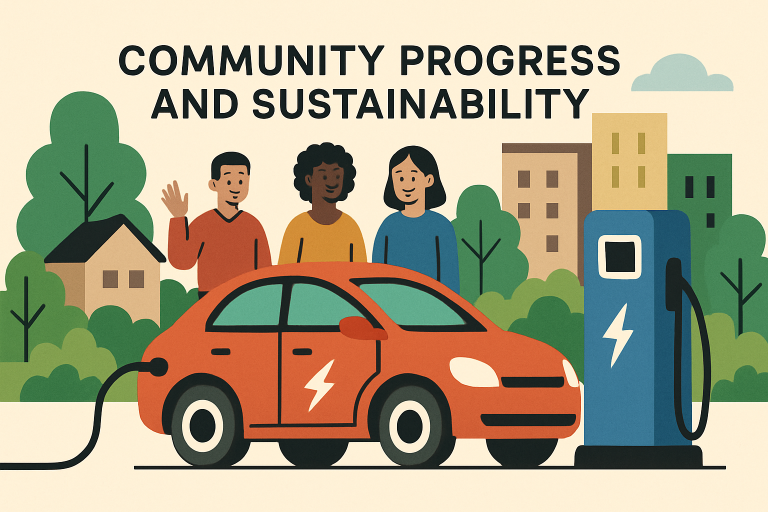
The Role of EV Charging Stations in Sustainability
EV charging stations represent a key pillar in the fight against climate change. By providing reliable and accessible charging options, these stations enable more drivers to switch from gasoline-powered vehicles to electric vehicles, directly reducing dangerous emissions that contribute to air pollution and global warming. According to the U.S. Environmental Protection Agency (EPA), electric cars produce less carbon pollution than their internal combustion counterparts, especially when charged with renewable energy sources.
In addition to cleaner air, the reduced dependence on fossil fuels leads to improved public health outcomes and a reduction in noise pollution. Urban areas, in particular, benefit from electrified transit systems and fleets, which can help cities meet their ambitious climate goals and provide leadership in sustainability practices.
Expanding Access in Underserved Communities
Accessible EV charging infrastructure in underserved neighborhoods ensures equity in the benefits of clean transportation. Efforts such as the California Energy Commission’s $38 million initiative for EV fast charging in low-income and disadvantaged areas highlight the importance of reducing both environmental and social inequity. By installing charging stations where they are needed most, these projects help bridge the transportation divide that has long existed between affluent and marginalized regions. Read more about the California Energy Commission Launch to understand the direct impact on communities.
This commitment is not just about environmental benefits, but also about economic empowerment. Local businesses can attract new customers as drivers seek convenient places to charge, and residents can participate in the growing EV job market. These investments anchor broader regeneration strategies while ensuring that everyone can play a role in shaping their cleaner, more resilient neighborhoods.
Government Initiatives and Funding
Recognizing the urgency of climate action, various government bodies have launched ambitious funding programs to accelerate EV charging infrastructure. Notably, the Biden administration’s $623 million in grants are projected to lay the groundwork for 500,000 public charging stations nationwide by 2030. This unprecedented investment demonstrates the level of commitment required to create a truly sustainable transportation ecosystem. Progress, however, relies not only on funding but on coordinated policies and robust public engagement to ensure that infrastructure deployment keeps pace with surging EV ownership.
Private Sector Contributions
Private companies are emerging as indispensable partners in the race to expand EV charging networks. Firms like EV Connect are actively collaborating with state utility programs to deploy DC fast charging in areas overlooked by traditional planning. Their efforts show that public-private partnerships drive innovation and close the gap in charging access where it’s needed most. These collaborations demonstrate how the private sector’s technical expertise and agility can complement public funding and planning frameworks.
Challenges and Solutions
Despite considerable investment, scaling EV charging infrastructure remains a major challenge. Federal program rollouts have experienced delays, with fewer than 400 ports installed from a $7.5 billion allocation as of April 2025. Barriers cited include regulatory hurdles, supply chain issues, and inconsistent local permitting processes. To address these issues, industry experts advocate for unified performance benchmarks, transparent accountability, and streamlined permitting to expedite construction. As more utilities and agencies adopt best practices, the sector can overcome these obstacles and optimize public benefit from each dollar invested.
Case Studies of Successful Implementations
Municipalities leading the transition to EV infrastructure offer valuable lessons. In San Francisco, for example, Revel has launched high-speed charging depots along the West Coast, supporting objectives to electrify a quarter of private vehicles by 2030. Such deployments are not exclusive to major cities—rural and suburban communities are also rolling out similar projects. By monitoring outcomes in these early adopter cities, policymakers and advocates can shape national best practices for equitable and sustainable charging expansion. Local successes distribute the benefits of clean air, economic growth, and technological empowerment broadly across populations.
Conclusion
The installation of EV charging stations is more than an environmental policy—it is a commitment to public health, resilience, and social progress. Through dynamic collaboration among governments, the private sector, and organized communities, the vision of sustainable, accessible transportation is quickly becoming a reality. Although hurdles persist, experience shows that coordinated action, innovation, and persistent advocacy can turn these challenges into stepping stones for building thriving, sustainable communities equipped for a cleaner tomorrow.
You May Also Read: Most Common Types of Auto Accidents: A Comprehensive Guide