





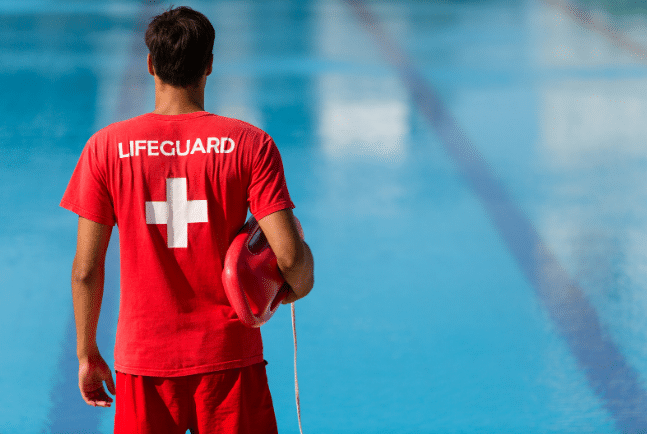
A different professional starts their day as the sun peaks above the water and the first beachgoers set out their towels. Lifeguarding is a deep and demanding profession that fosters remarkable people, contrary to the usual view of a seasonal post for youngsters. It is a position where split-second decisions carry the weight of a human life, and from which great satisfaction is derived from service. But for individuals sensing the call to this essential effort, a fundamental question emerges right at the beginning: How to get Life Guard Certification?
Your path for this vital training will greatly affect your confidence, preparedness, and influence. This raises another important question for many would-be lifesavers another important question: why choose the American Lifeguard Association for lifeguard instruction?
The journey to lifeguarding requires people to assume greater levels of responsibility. The process involves transforming from a skilled swimmer to become a protective watchman and an emergency responder and a reliable member of society. Your certificate honors your ability, physical readiness, and mental strength; it is not simply a card for your wallet. The complete process of every effective rescue operation depends on this element which provides professional practitioners their unique self-assurance.
What Does Lifeguard Certification Truly Entail?
The first actual step is knowing that how to get lifeguard certification. It’s a mechanism developed to identify people with the appropriate ability and motivation. Typically, candidates have to fulfil exacting criteria, including a minimum age (usually 15 or 16), outstanding swimming ability shown through timed swims and retrieval drills, and the physical capacity to carry out challenging rescues. Far from a typical academic course, the certification program itself is an immersive event.
Simulated catastrophes—spinal injury management in turbulent water, performing CPR on a manikin as exhaustion sets in, directing a multi-victim response with a crew—trainees are thrust. Here is where textbook information becomes instinct and muscle memory. The greatest programs recognize that a lifeguard needs to operate under great stress; hence, the training is designed to be as hard. This is where the choice of provider becomes most important since the depth, rigor, and realism of the curriculum directly affect how prepared a new lifeguard would be on their first solo watch.
Why Does the Choice of Training Provider Matter So Much?
With many institutions providing certification, one might find oneself just picking the most practical or inexpensive solution. But in a field where margins for error are zero, your training quality matters most. Therefore, why pick the American Lifeguard Association for lifeguard instruction? The difference is a thorough, contemporary, and extremely pragmatic approach to lifesaving instruction.
The American Lifeguard Association (ALA) has developed its reputation on a curriculum that matches the actual difficulties guards face. Their instruction is more than just checking boxes. It guarantees graduates are familiar with current best practices by combining the most recent protocols in emergency cardiovascular treatment, water rescue methods, and first aid. But even more crucially, ALA classes stress adaptable response and critical thinking.
They equip lifeguards for the unexpected: the unusual-angle spinal injury, the panicked victim who resists the rescuer, the sudden change in weather that transforms a tranquil scene into a dangerous one. Many times, seasoned veterans with years of on-the-job experience bring their wisdom into the classroom and pool, presenting ideas no book can offer.
Moreover, because of its national reputation, the ALA’s lifeguard certification is valued by businesses at beaches, pools, water parks, and community centers throughout the nation. Selecting a broadly certified group, such as the ALA, eliminates employment obstacles and guarantees facility managers that you have a top-tier safety and rescue education.
How Does Quality Training Translate to Real-World Readiness?
The value of outstanding teaching becomes painfully obvious when one moves from training pool to active duty. Certified through a demanding program, a lifeguard believes they can perform what they know. Hesitation is not an option when a youngster passes under the surface unnoticed by others or a swimmer gets caught in a rip current. The answer has to be quick, accurate, and automatic.
This ingrained readiness brings great professional satisfaction. While the emotional reward of a successful rescue is great, so is the silent satisfaction in a day spent avoiding disasters by proactive awareness and public education. A trained lifeguard knows that prevention is as important as intervention; they warn swimmers of dangers, set themselves strategically, and constantly survey their area of accountability. Thoroughness of one’s initial instruction directly provides the confidence to flawlessly carry out these responsibilities.
What Lasting Impact Does Lifeguarding Have on a Person?
Particularly via a rigorous provider, the advantages of obtaining lifeguard certification reach far beyond the shoreline. The abilities developed are life skills. The discipline needed to keep top physical condition, the quiet leadership required to manage a chaotic scene, the unambiguous communication vital for teamwork under strain—these characteristics are highly valuable in any future job, from healthcare and public safety to business and education.
Lifeguards gain a special perspective and resilience. They develop the capacity to quickly evaluate risk, control their surroundings, and act with power and compassion. They join a tight-knit team bound by mutual responsibility, in which trust is assumed, and communication is usually wordless. Forging character, this experience instills a lifetime dedication to service and a great awareness of personal capacity.
Are You Ready For the Calling?
The current lifeguard shortage which affects multiple communities creates a safety issue that goes beyond the problem of insufficient staffing. The situation demonstrates that more dedicated individuals must acquire essential skills which enable them to protect both visitors and local residents. The choice to become a lifeguard establishes your intention to create immediate and permanent positive impacts throughout the world. Your work requires you to maintain safety through your mere existence while your decisions will determine which path a person will take.
The journey begins through a single strategic choice which leads to the selection of the best possible base for this vital project. You establish a commitment to maintain excellence standards through your quest to join the American Lifeguard Association which operates as an elite organization instead of learning that how to get lifeguard certification.
You will achieve readiness for any situation which includes both rescue missions and situations that require disaster prevention skills. The level of satisfaction you achieve from your work depends entirely on the quality of training which prepares you for your job. Are you ready to start a job that defines a goal rather than merely passing the time? If your answer is yes, then click here to register for the best lifeguard training program.