





Table of Contents
- Introduction to Dental Implant Education
- Key Components of Implant Training Programs
- Benefits of Advanced Implant Training
- Choosing the Right Course
- Integrating New Skills into Practice
- Conclusion
Introduction to Dental Implant Education
In recent years, dental implantology has not only made significant strides but also become a cornerstone of advanced dental care, transforming the reputation and capabilities of dental professionals worldwide. This ongoing evolution means that both general practitioners and specialists must consistently update their knowledge and skills. New tools, techniques, and biological discoveries continually reshape the field, improving solutions for tooth loss and making dental implants accessible and reliable for more patients. To keep pace with these developments, clinicians benefit hugely from comprehensive training that examines every aspect of modern implantology, from patient assessment and procedure planning to advanced surgical and prosthetic protocols. Enrolling in respected programs, such as those offered by the Pikos Institute, is an excellent way to access state-of-the-art educational resources, engage with leaders in the field, and experience hands-on learning with real patient cases and simulated procedures.
Consistently updating your clinical repertoire with the latest techniques is essential; proactive clinicians not only gain a competitive edge but also provide patient-centered care that improves oral health outcomes. As demand for advanced tooth replacement options grows, so too does the expectation that practitioners remain current with contemporary protocols and evidence-based practices. Making periodic education a priority is an investment that pays dividends, enabling you to serve a broader range of patients while positioning your practice at the forefront of innovation.
Key Components of Implant Training Programs
High-quality implant training programs are intentionally structured to provide a comprehensive, well-rounded education. This blend of foundational theory with immersive, hands-on practice is designed to enable lasting skill development, ensuring that graduates can confidently perform a range of procedures from simple implant placements to complex rehabilitations. A strong curriculum will introduce participants to science-based rationale and then guide them through practical application under the supervision of seasoned clinicians, using both clinical simulators and live patient cases when possible.
- Fundamental Principles: Thorough training in anatomy and physiology underpins all successful surgical outcomes. Students will gain a deeper understanding of osseointegration—the process by which dental implants bond to the jawbone—and critical pre-treatment diagnostics, such as panoramic radiography, cone beam CT imaging, and medical history review. This knowledge ensures safe patient selection and optimally planned interventions, setting the stage for long-term success.
- Surgical Techniques: Through lectures, workshops, and hands-on simulated surgeries, participants refine their hand skills in implant placement, flap design, suturing, soft tissue management, and advanced bone augmentation or grafting. This experience prepares clinicians to navigate a wide variety of clinical scenarios, including those with challenging anatomy or limited bone volume.
- Prosthetic Solutions: Implant dentistry is not just about placement—restoration is equally critical. Comprehensive programs explore the nuances of impression techniques, prosthetic design and customization, occlusal considerations, and the placement of implant-supported crowns, bridges, and overdentures. Mastery in this area ensures that both esthetic and functional outcomes are achieved, enhancing overall patient satisfaction.
- Complication Management: Top-tier training emphasizes thorough risk assessment and provides practical strategies for troubleshooting and preventing complications such as peri-implantitis, poor osseointegration, and screw loosening. Trainees learn evidence-based protocols for remediation and maintenance, supporting long-term implant health and minimizing patient distress should issues arise.
Benefits of Advanced Implant Training
Participating in comprehensive dental implant courses yields notable, tangible benefits for practitioners at every stage, whether early in their careers or seeking to deepen specialized expertise. These programs are designed to raise the standard of care across your practice and open new avenues for professional growth:
- Enhanced Clinical Skills: Through rigorous training, dentists develop the precision and dexterity required for successful outcomes in even the most complex dental implant cases. This technical mastery directly translates into greater predictability and reduced procedural complications, making positive word of mouth and patient loyalty more likely.
- Increased Confidence: Distinct from self-study, structured implant training provides repeated exposure to real-life clinical scenarios, building the self-assurance that is crucial for successful, independent performance. Skills honed in these environments transfer immediately to your dental office, increasing your ability to provide a broader scope of services and address a wider variety of patient concerns.
- Practice Growth: As patients increasingly demand contemporary tooth replacement options, offering comprehensive implant services sets your practice apart and attracts a more diverse patient base. The ability to expertly provide single-tooth implants, full-arch restorations, or hybrid treatment solutions can significantly enhance your reputation—fueling word-of-mouth referrals and contributing to lasting business stability.
Choosing the Right Course
Selecting the most suitable dental implant training program is a critical step toward maximizing your educational investment and directly benefiting both your clinical growth and patient outcomes. Not all programs are created equal, so it’s essential to identify those that meet your specific goals and align with the evolving needs of your patient population. Consider the following factors when evaluating and comparing available courses:
- Accreditation: Always verify that reputable dental organizations or academic institutions recognize your chosen training program. Accredited courses guarantee a baseline standard of content quality, teaching rigor, and professional acceptance, ensuring that your new qualifications and skills are respected industry-wide.
- Curriculum: A strong syllabus will address both surgical and prosthetic aspects of implantology, integrate hands-on components such as live patient cases or high-fidelity simulators, and incorporate case-based learning that mimics real-world scenarios. Ensure that the education is grounded in the latest scientific research and evidence-based practice, equipping you with knowledge relevant to today’s clinical challenges.
- Faculty Expertise: Learning under the guidance of acclaimed instructors and actively practicing clinicians adds invaluable mentorship and insights. These experts bridge the gap between classroom theory and chairside application, sharing tips honed from years of real-world experience and often becoming long-term professional contacts.
Integrating New Skills into Practice
Gaining new knowledge and technical proficiency is only the first step; true transformation comes from thoughtfully integrating these capabilities into your daily practice. A systematic approach to implementation is essential for ensuring patient safety, high satisfaction, and enduring improvements in clinic efficiency:
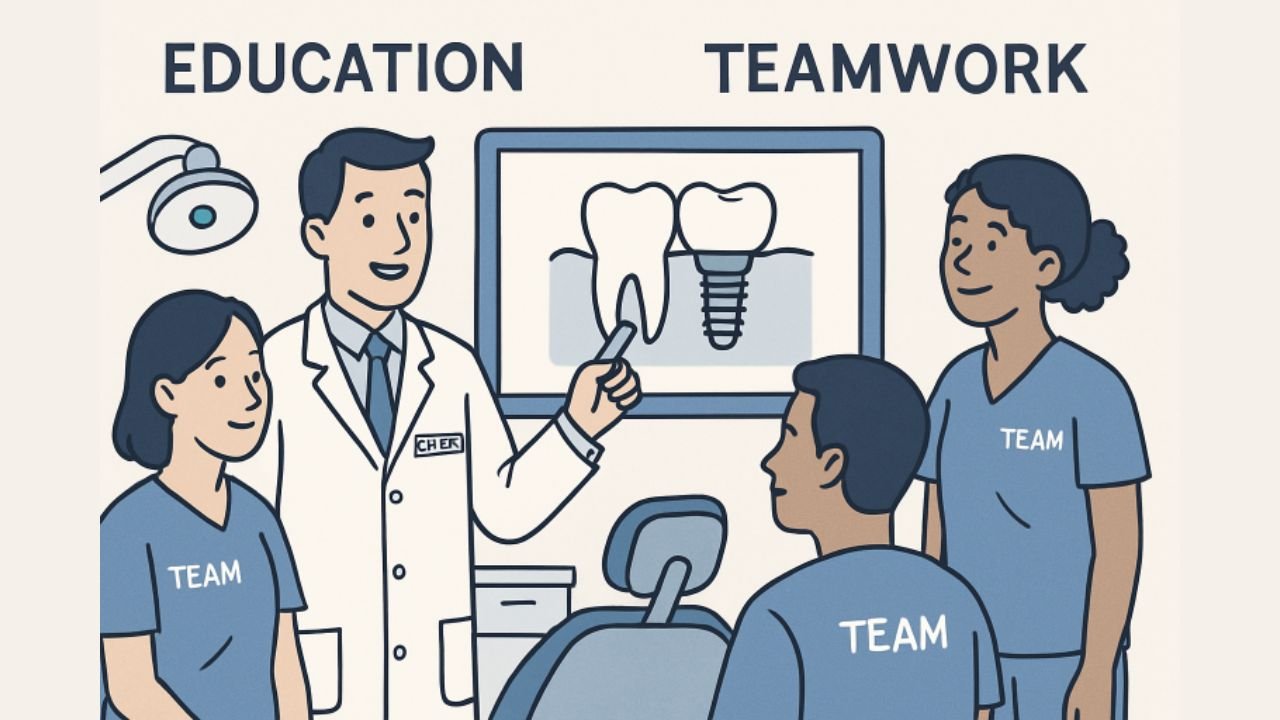
- Team Training: Effective integration starts with ensuring the entire dental team is included in the process. Conduct in-office training sessions to familiarize dental assistants, hygienists, and administrative staff with new protocols, digital tools, and surgical instruments. Building enthusiasm and buy-in at every level reduces resistance to change and ensures a smoother transition to updated workflows.
- Patient Communication: Adopting implantology can be daunting for patients, especially first-timers. Use accessible, jargon-free explanations to build trust, help patients understand the benefits of dental implants, clearly outline the procedure, and address common concerns about discomfort, procedure duration, costs, and post-surgical care. Transparent communication—from informed consent to post-op instructions—reduces anxiety and increases the likelihood of high patient satisfaction.
- Continuous Learning: Dental implantology is a rapidly developing field. Stay engaged with ongoing professional development by joining relevant organizations, participating in local or international industry conferences, and taking part in study clubs or online peer forums.
Conclusion
Remaining at the forefront of dental technology and technique through robust implant training opens new opportunities for practitioners who wish to offer the highest caliber of patient care. By enrolling in reputable courses, working with expert mentors, and committing to lifelong education, dental professionals not only meet the changing demands of modern patients but also set new standards in their practices. The skills gained are not just for personal advancement—they translate directly into improved patient outcomes, enhanced case acceptance, and a thriving, patient-centered dental practice prepared for future innovation.
You May Also Like: How to Choose the Right Orthodontist in Orland Park for Your Family